 Pryse
PryseHow to Tell Customers About Price Increase: 8 Communication Methods That Work
Use multiple channels (email, phone, in-person), give 60-90 days notice, explain specific reasons, and offer options. Research shows long-tenure customers accept increases better than new customers.
The way you tell customers about a price increase determines whether they accept it or leave. Research shows the method matters as much as the message.
A 2009 study published in the Journal of Service Research found that customer tenure significantly moderates price sensitivity—long-tenure customers tolerate price increases better than new customers. But that tolerance only holds if you communicate the increase properly across the right channels with adequate notice.
Companies that use multiple communication channels (email, phone, in-person meetings) and give 60 to 90 days notice retain 85% to 95% of customers through price increases. Companies that rely on a single mass email with short notice lose 30% or more.
The difference isn't what you're charging. It's how you tell them, when you tell them, and which channels you use to communicate the change.
The 8 Methods for Telling Customers About Price Increases
Use multiple methods to ensure every customer hears about the increase through their preferred communication channel. Layer these approaches for maximum retention.
Method 1: Email (Primary Notification Channel)
Email is the foundation of price increase communication. It creates a documented record, reaches all customers simultaneously, and gives customers time to process the information before responding.
When to use: As the primary notification to all customers 60 to 90 days before the effective date.
How to structure the email:
- Clear subject line: "Pricing Update Effective July 1, 2026"
- Direct opening: State the new price in the first sentence
- Exact effective date: "Effective July 1, 2026" not "next quarter"
- Specific reasons: "Labor costs increased 6%, materials rose 12%"
- Customer options: Lock in current pricing, continue at new rate, or discuss alternatives
- Contact information for questions
According to Togai's research on price increase communication, being transparent makes your communication more trustworthy and authentic and makes it easier for a customer to justify paying the higher price.
Example opening:
"Starting July 1, 2026, our pricing will be adjusting to $5,500/month (currently $5,000/month). This 10% increase reflects rising labor costs (up 6%), material costs (up 12%), and our investment in faster delivery capabilities that reduced lead times from 5 days to 2 days."
What to avoid: Burying the price change in paragraph three, using vague subject lines like "Important Update," or apologizing excessively for the increase.
For complete email templates across seven industry scenarios (SaaS, B2B wholesale, manufacturing, professional services, contractors, e-commerce, and general B2B), see our price increase email templates.
Method 2: Phone Calls to High-Value Customers
Your top 20% of customers by revenue or margin deserve personal outreach before the mass email announcement.
When to use: 90 days before the effective date, before sending the mass email to all customers.
Why this works: High-value customers expect personal communication. Proactive phone calls show you value the relationship and give them space to voice concerns before making a decision.
Call script structure:
Opening: "Hi [Name], I wanted to give you a heads-up before we send the official announcement next week. Starting July 1, our pricing is adjusting to $5,500/month."
Rationale: "This reflects the investment we've made in [specific improvements] and the rising costs we've absorbed over the past 18 months—labor up 6%, materials up 12%."
Value reinforcement: "Since we started working together, we've [delivered specific results, solved specific problems, achieved specific ROI]. We're committed to continuing that level of service."
Options: "I wanted to give you some alternatives. You can lock in current pricing through December 2027 by signing a 24-month contract, continue at the new rate, or we can discuss a customized tier if budget is a constraint."
What to avoid: Reading from a script robotically, failing to listen to their concerns, or offering no alternatives.
Research published in the Journal of Service Research found that customers with 3+ years tenure are far less likely to churn on a price increase—making personal calls to long-tenure, high-value accounts a high-ROI retention strategy.
Method 3: In-Person Meetings (For Local Customers)
For customers you see regularly—distributors meeting with buyers, contractors meeting with property managers, service providers visiting client sites—discuss the price increase face-to-face during your next scheduled interaction.
When to use: 60 to 90 days before the effective date, during regular business meetings or site visits.
Why this works: In-person communication allows you to read body language, address concerns immediately, and reinforce the relationship. It's harder for customers to terminate a relationship when you're standing in front of them demonstrating value.
Conversation flow:
- Context setting: "I wanted to discuss an upcoming change to our pricing while I'm here today."
- Direct statement: "Starting July 1, our rates are adjusting from $150/hour to $165/hour."
- Reason: "This reflects the cost increases we've absorbed over the past 18 months—insurance up 8%, labor up 6%, fuel up 10%—and the improvements we've made to service quality."
- Acknowledge relationship: "I value our partnership and wanted to discuss this with you personally before you received the official notification."
- Offer options: "You can lock in current rates by signing a 12-month agreement by May 15, or we can continue at the new rate starting July 1."
What to avoid: Springing the increase on customers during a service complaint discussion or immediately after a problem. Timing matters.
Method 4: Video Calls (For Remote Customers)
For B2B customers you don't see in person, schedule video calls to discuss the price increase with key accounts.
When to use: 90 days before the effective date, for top 20% of customers who are geographically remote.
Why this works: Video calls create a personal connection without travel costs. They're more engaging than phone calls and allow you to share screen to walk through pricing changes, new features, or value delivered.
Meeting agenda:
- 10 minutes: Relationship check-in and updates
- 5 minutes: Price increase notification with specific details
- 10 minutes: Discussion of customer options and addressing concerns
- 5 minutes: Next steps and follow-up plan
Follow-up: Send a summary email within 24 hours confirming what was discussed and outlining the customer's options.
Method 5: Team Training (For Customer-Facing Staff)
Your sales reps, account managers, customer service team, and field technicians will be asked about the price increase. Train them to discuss it confidently and consistently.
When to use: 30 days before sending the mass email announcement, so your team is prepared when customers call.
What to train on:
Talking points document: One-page summary with key messages:
- Exact pricing change and effective date
- Specific reasons (with numbers)
- Customer options
- Who to escalate to for detailed conversations
FAQ script: Answers to common objections:
- "Why are you raising prices?"
- "Can you hold pricing for another 6 months?"
- "Your competitor is cheaper."
- "I'm going to need to cancel."
Role-play scenarios: Practice handling objections with confident, empathetic responses.
According to best practices from Simpro Group, notify customers with a consistent message through multiple channels to increase the likelihood of customers seeing the message.
Example FAQ response:
Customer: "Why are you raising prices?"
Team member: "Great question. Over the past 18 months, our costs have increased significantly—labor up 6%, materials up 12%, insurance up 8%. We've absorbed these increases while maintaining service quality and adding [specific improvements]. The pricing adjustment reflects these realities and allows us to continue delivering the level of service you expect."
Method 6: Account Review Meetings (For Enterprise Customers)
For large accounts with quarterly business reviews or regular check-ins, present the price increase as part of a structured account review.
When to use: 90 days before the effective date, during regularly scheduled quarterly business reviews.
Why this works: You can tie the price increase to measurable value delivered, results achieved, and improvements made. The context of the relationship makes the increase feel justified.
Meeting structure:
- Performance review: Show results delivered over the past quarter or year (cost savings, efficiency gains, revenue impact)
- Investment discussion: Explain what you've invested to deliver those results (team expansion, technology upgrades, process improvements)
- Cost environment: Share specific cost increases you've absorbed (labor, materials, software, overhead)
- Pricing adjustment: Present the new pricing as a reflection of value delivered and rising costs
- Options and discussion: Offer long-term contract options, discuss budget constraints, negotiate terms
What to bring: Data showing ROI, benchmarks comparing your pricing to competitors, specific examples of value delivered.
Method 7: Letter or Formal Notice (For Contract Customers)
Some industries and customer contracts require formal written notice of pricing changes. This is especially common in distribution, wholesale, manufacturing, and long-term service contracts.
When to use: 60 to 90 days before the effective date, sent via certified mail or email with read receipt for documentation.
Why this works: Formal letters create a legal record of notification, which protects you if customers claim they weren't notified. They also signal the change is final and official.
Letter structure:
- Date and customer address
- Subject line: "Notification of Pricing Adjustment Effective [Date]"
- Opening paragraph: Direct statement of price change
- Justification paragraph: Specific reasons with data
- Effective date and details: What changes and when
- Customer options: How to lock in current pricing or discuss alternatives
- Contact information for questions
- Professional closing
For complete letter templates across eight scenarios (B2B wholesale, manufacturing, professional services, contractors, service agreements, landlords, SaaS, and general business), see our price increase letter templates.
Method 8: Website FAQ or Help Center Update
After sending direct notifications (email, calls, meetings), update your website to address common questions customers will have.
When to use: Immediately after sending the mass email announcement.
What to include:
- Effective date: When does the new pricing start?
- Who it affects: Existing customers, new customers, or both?
- Pricing details: What are the new rates?
- Options: How can customers lock in current pricing?
- Reason: Why are prices increasing?
- Contact: Who should customers call with questions?
Why this works: Customers will Google your company name + "price increase" after receiving the email. Having a clear FAQ page ensures they find accurate information and answers their questions without requiring a support call.
How to Combine Methods for Maximum Retention
The best results come from layering multiple methods over 60 to 90 days. Here's the proven sequence:
Day 1 (90 days before effective date):
- Schedule personal phone calls or video meetings with top 20% of customers by revenue
Day 7 (75 days before):
- Send mass email announcement to all customers
- Update website FAQ page
- Train customer-facing team on talking points
Day 14 (68 days before):
- In-person meetings with local customers during regular business visits
- Account review meetings with enterprise customers
Day 30 (60 days before):
- Follow-up email to customers who haven't responded
- Team check-in: review customer questions and objections
Day 45 (45 days before):
- Reminder email with deadline to lock in current pricing
- Personal calls to at-risk customers or those who expressed concerns
Day 75 (15 days before):
- Final reminder email
- Update billing systems and contracts
Day 90 (Effective date):
- Confirmation email that new pricing is in effect
- Monitor churn and customer responses
According to HubSpot's customer retention research, using multiple touchpoints ensures no customer misses the notification and gives them repeated opportunities to ask questions or lock in current pricing.
How Much Notice to Give (By Customer Type)
| Customer Type | Minimum Notice | Recommended | Communication Method |
|---|---|---|---|
| B2B annual contracts | 60 days | 90 days | Email + personal call for top accounts |
| Month-to-month SaaS | 30 days | 60 days | Email + website FAQ |
| Wholesale/distribution | 60 days | 90 days | Email + in-person meetings + formal letter |
| High-value accounts (top 20%) | 90 days | 90+ days + personal call | Video call or in-person + follow-up email |
| Enterprise customers | 90 days | 90+ days | Account review meeting + formal letter |
| New customers (under 1 year) | 60 days | Consider grandfathering | Email only, or delay increase |
According to the U.S. Chamber of Commerce guide on communicating price increases, it's best practice to provide customers with at least three months' notice to allow planning, budgeting, and contract revisions.
What to Say: Scripts for Different Scenarios
Script 1: Phone Call to High-Value Customer
"Hi [Name], I wanted to reach out personally before we send our official announcement next week. Starting July 1, our pricing is adjusting to $5,500/month, which is a 10% increase from your current $5,000/month rate.
I wanted to walk through why we're making this change. Over the past 18 months, we've absorbed significant cost increases—labor up 6%, materials up 12%, insurance up 8%. At the same time, we've invested heavily in improvements that benefit you directly: we cut delivery times from 5 days to 2 days, expanded support to 24/7, and launched [new features/capabilities].
Since we started working together [X time ago], we've [delivered specific results: saved you $120K, improved accuracy to 99.8%, reduced processing time by 40%]. We're committed to continuing that level of service.
I wanted to discuss your options. You can lock in current pricing through December 2027 by signing a 24-month contract before May 15. Or we can continue at the new rate starting July 1. If budget is a concern, we can also discuss a modified service tier at a lower price point.
What makes sense for you?"
Script 2: In-Person Conversation (Local Customer)
"I wanted to discuss an upcoming change while I'm here today. Starting July 1, our rates are adjusting from $150/hour to $165/hour.
This reflects the cost increases we've absorbed over the past year—labor up 6%, fuel up 10%, insurance up 8%—and the investments we've made in equipment and training that improve the quality and speed of our work.
I value our partnership and wanted to let you know personally before you received the official notice. You have a few options: you can lock in the current $150/hour rate by signing a 12-month agreement before May 15, or we continue at the new rate starting July 1.
Do you have any questions or concerns I can address?"
Script 3: Team Response to Customer Questions
Customer calls and asks: "I just got an email about a price increase. What's going on?"
Team member response: "Yes, starting July 1, our pricing is adjusting by [X%] to reflect rising costs and the improvements we've made to service. Over the past 18 months, labor costs increased 6% and materials rose 12%, which we've absorbed while maintaining quality.
The good news is you have options. You can lock in current pricing by signing a longer-term agreement before [deadline], or continue at the new rate starting July 1. Would you like me to connect you with [account manager/sales rep] to discuss your options in detail?"
Script 4: Account Review Meeting (Enterprise Customer)
"I want to review the results we've delivered over the past year, discuss upcoming pricing changes, and outline your options moving forward.
Since we started working together, we've [delivered specific results: reduced your costs by $500K annually, improved uptime to 99.9%, cut processing time by 40%]. That ROI represents a [X]x return on your investment with us.
To continue delivering those results, we've invested heavily in [team expansion, technology upgrades, process improvements]. At the same time, our operating costs have increased—labor up 6%, software up 12%, overhead up 8%.
Starting July 1, our pricing is adjusting from $X to $Y, which is a [Z%] increase. Based on the value we deliver and the cost environment, this pricing reflects market rates for the service level you receive.
I'd like to discuss options that work for your budget. We can hold current pricing through [date] if you're willing to commit to a 24-month contract, or we can implement the new pricing starting July 1. There's also a middle option: a reduced-scope tier at [lower price] if budget is a constraint.
What makes sense for your team?"
How to Handle Objections When Telling Customers
Even with perfect communication, some customers will push back. Here's how to respond:
Objection 1: "This is the first I'm hearing about it."
Response: "I apologize if you didn't see the email we sent on [date]. Let me walk you through the details now: starting July 1, pricing is adjusting to $[X], which reflects [specific reasons]. You still have time to lock in current pricing by [deadline] if you'd like to discuss that option."
Why this works: You acknowledge their concern without getting defensive, then redirect to solutions.
Objection 2: "Your competitor is charging less."
Response: "I understand price is a factor. The difference is we provide [specific value you deliver that they don't]—faster turnaround, dedicated account management, higher quality. Our customers tell us they're willing to pay a premium for that reliability. That said, if budget is a constraint, we can discuss a modified service tier."
Why this works: You compete on value, not price. If they only care about price, they're not your ideal customer anyway.
Objection 3: "Can you hold pricing for another 6 months?"
Response: "I can hold pricing through [date] if you're willing to sign a 12-month contract today. That locks in current rates for the next year. Otherwise, the increase takes effect July 1 as planned."
Why this works: You trade a delay for commitment, which is a fair exchange.
Objection 4: "I need to cancel."
Response: "I'd hate to lose you. Can you help me understand—is this purely a budget issue, or is there something about the service we should be doing better?
[If budget:] Let me see if we can find a middle ground. Would [reduced service tier at lower price] work for you?
[If value:] That's good feedback. Let's schedule a call to discuss what we can improve."
Why this works: Research shows that 60% of customers who threaten to cancel don't actually cancel if you engage them in conversation and offer alternatives.
Objection 5: "This is too much, too fast."
Response: "I understand. Let me explain how we arrived at this number. [Walk through specific cost increases with percentages.] We've absorbed these costs for [X months] without raising prices, but we've reached the point where we need to adjust to maintain quality.
That said, I can offer you a phased approach: we implement half the increase now and the other half in 6 months. Would that work better for your budget?"
Why this works: You provide transparency on how you calculated the increase, then offer a compromise that reduces the immediate impact.
Common Mistakes When Telling Customers
Mistake 1: Using only one communication channel
Relying solely on email means some customers won't see the message or will ignore it. Use multiple channels—email, phone, in-person, website—to ensure everyone hears about the change.
Mistake 2: Giving insufficient notice
Telling customers 15 or 30 days before the effective date doesn't give them time to budget or plan. Research shows customers view less than 60 days as inadequate, especially in B2B where budgets are set quarterly or annually.
Mistake 3: Being vague about reasons
"Due to rising costs" explains nothing. Be specific: "Labor costs increased 6%, steel prices rose 14%, freight costs went up 8%."
Mistake 4: Not offering options
If the only choice is "accept the increase or leave," price-sensitive customers leave. Offer alternatives: lock in current pricing with a longer contract, switch to a reduced-service tier, or discuss a phased increase.
Mistake 5: Apologizing excessively
Saying "we're really sorry, but we have to raise prices" undermines your product's value. According to Orb's guide on price increase communication, if you sound too apologetic when announcing your price increase, you are undermining your product's value.
Mistake 6: Telling new customers and long-tenure customers the same way
Research published in the Journal of Service Research found that customer tenure significantly moderates price sensitivity. Long-tenure customers (3+ years) tolerate price increases better than new customers (under 1 year). Segment your communication: give long-tenure customers larger increases with personal calls, and consider grandfathering new customers at current pricing.
Industry-Specific Approaches
Distribution and Wholesale
Best method: Combination of email (60-90 days advance notice), in-person meetings during sales calls, and formal letter.
Key message: "Supplier costs increased [X%], freight costs rose [Y%]. We've absorbed these increases for [X months] while maintaining inventory availability. Starting [date], pricing adjusts by [Z%]."
Customer option: "Submit purchase orders before [deadline] for delivery through [date] at current pricing."
Professional Services and Consulting
Best method: Personal phone calls or video meetings with each client, followed by email confirmation.
Key message: "Since we started working together, we've [delivered specific results]. Our rates are adjusting from $X to $Y starting [date] to reflect the value we deliver and rising operational costs."
Customer option: "Lock in current rates through [date] by signing a 12-month retainer agreement before [deadline]."
SaaS and Software
Best method: Mass email to all users, followed by in-app notifications and website FAQ.
Key message: "We've launched [Feature 1], [Feature 2], and [Feature 3] since you joined. Pricing is adjusting to $X/month starting [date] to reflect this increased value."
Customer option: "Upgrade to an annual plan before [deadline] and lock in $[current monthly rate × 12] for 12 months."
Manufacturing and Contract Manufacturing
Best method: Email to all customers, personal calls to top 20% of accounts, formal letter for documentation.
Key message: "Raw material costs increased [X%], labor costs rose [Y%], and freight costs went up [Z%]. Pricing on [product line] is adjusting by [%] effective [date]."
Customer option: "Place purchase orders before [deadline] for delivery through [date] at current pricing."
Where to Start: Your 60-Day Communication Plan
If you need to tell customers about an upcoming price increase:
Week 1-2 (60-90 days before):
- Segment your customer base by revenue, tenure, and price sensitivity
- Draft email template with specific pricing, dates, and reasons
- Prepare talking points document for customer-facing team
- Schedule personal calls with top 20% of customers
Week 3 (75 days before):
- Make personal calls to high-value accounts
- Send mass email announcement to all customers
- Update website FAQ page
- Train customer-facing team on objection handling
Week 4-6 (45-60 days before):
- In-person meetings with local customers
- Video calls with remote enterprise accounts
- Follow-up email to customers who haven't responded
Week 7-8 (30 days before):
- Reminder email with deadline to lock in current pricing
- Personal outreach to at-risk customers or those who expressed concerns
Week 9 (15 days before):
- Final reminder email
- Update billing systems and contracts
Week 10+ (Effective date and beyond):
- Confirmation email that new pricing is in effect
- Monitor churn daily for first 30 days
- Track objections and reasons for cancellations
- Conduct win-back campaigns for churned customers after 60 days
For businesses managing complex pricing across hundreds of customers or SKUs, identifying where you have pricing power is the bottleneck. Which customers can absorb a 10% increase? Which products have margin leakage that justifies a 15% adjustment?
If you need to analyze margin by customer, product, or transaction before raising prices, Pryse provides instant visibility into where you have pricing power. Upload your data and see margin leakage in 24 hours.
For copy-paste email templates across seven industry scenarios, see our price increase email examples. For formal letter templates with detailed structure, see our price increase letter guide. For the complete strategic framework on raising prices while retaining 85-95% of customers, see our guide on how to raise prices without losing customers. For broader margin improvement strategies beyond price increases, see our complete guide to improving profit margins.
Sources
- Journal of Service Research: The Effect of Service Price Increases on Customer Retention
- Thryv: How to Tell Customers About Price Increases: 11 Tips & Examples
- Togai: Communicating A Price Change: 6 Strategies That Work
- U.S. Chamber of Commerce: How to Communicate a Price Increase to Customers
- HubSpot: How to let customers know about a price increase
- Simpro Group: How to Communicate a Price Increase to Your Customers
- Shopify: How To Increase Prices: Strategies and Best Practices (2026)
- Orb: Write a price increase letter to customers (4 templates + tips)
- American Express: 12 Ways to Raise Prices Without Ticking Off Your Customers
- Better Marketing: How to Raise Prices Without Losing Customers (or Your Nerve)
- Richmond Fed: How Well Do Firms Retain Customers After Price Increases?
Last updated: February 24, 2026
Frequently Asked Questions
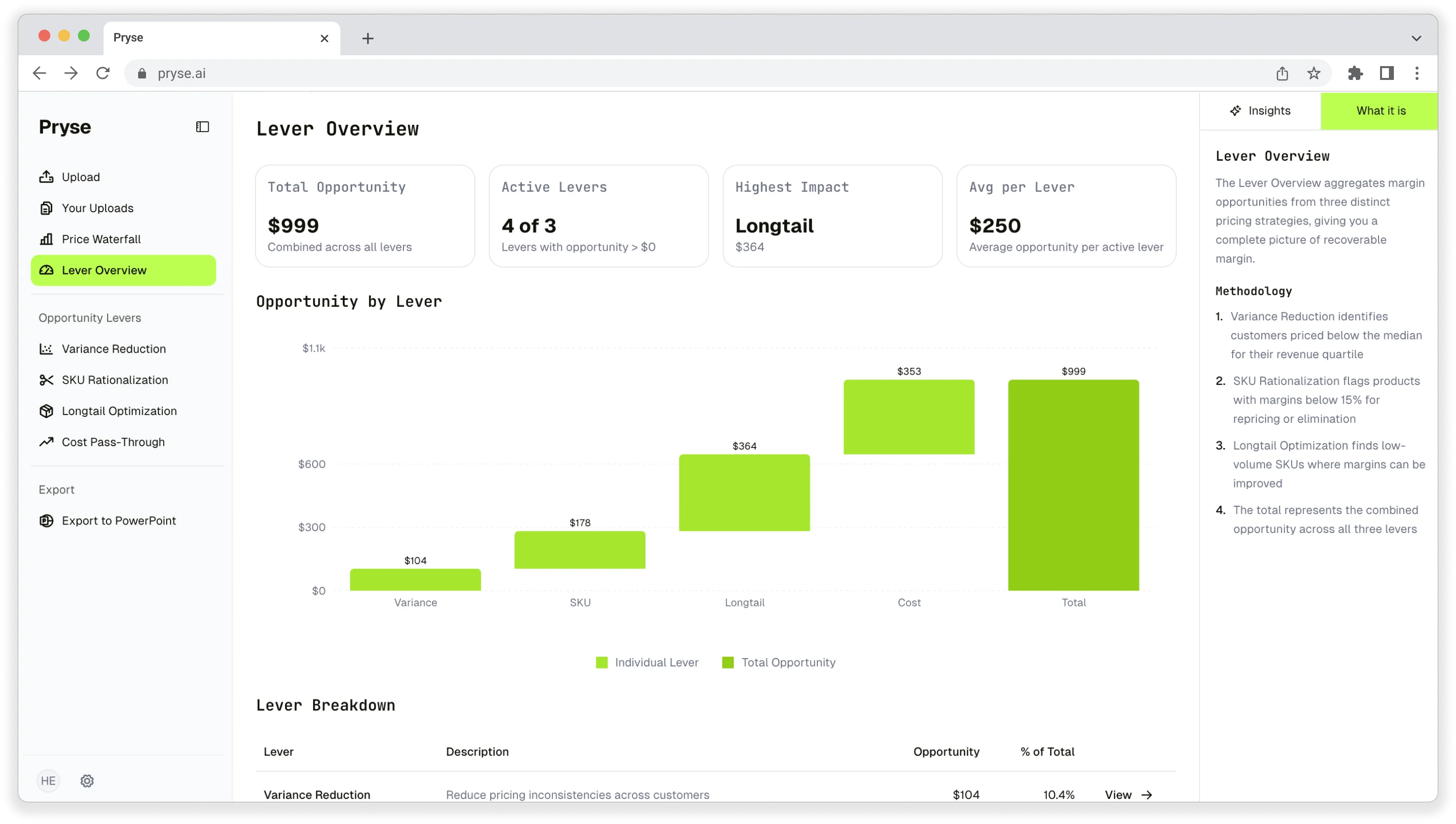
Want to analyze your entire product catalog?
Pryse automatically identifies margin leakage across thousands of SKUs. Upload your data and find hidden profit in 24 hours.
One-time $1,499 diagnostic. No subscription required.